

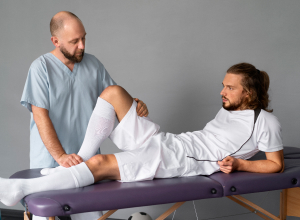

The word 'plegia' means weakness so severe that it is nearly complete. 'Hemi' implies one side of the body. Hence, 'hemiplegia' means complete paralysis of one half of the body, including one arm and leg. Any disease or injury in the motor centres of the brain can cause hemiplegia.
Hemiplegia is a more severe form of 'hemiparesis' wherein one-half of the body is only weakened. It is also very different from the conditions of paraplegia & quadriplegia, which are commonly confused with hemiplegia. Paraplegia is paralysis in both legs, below the waist. Quadriplegia is paralysis below the neck and is also usually the result of a spinal cord injury.
Many conditions give rise to hemiplegia. Generally, an injury to the right side of the brain will cause left-sided hemiplegia while an injury to the left side will cause right-sided hemiplegia.
Ask your questions to Dr S.M Abdur Rauf Arham's team directly & get an expert opinion on your ailment!.
Injury or insults to the brain cells that control movements in one half of the body cause hemiplegia. Hence, symptoms largely depend upon the part of the brain affected. The same can be said about the severity of individual symptoms.
Read more about Conditions related to Hemiplegia: Bell's Palsy (Facial Paralysis)
US-Canada: +1-315-351-0898
What your doctor wont tell you about homeopathy?
What doctors should know about Homeopathy?
How to find a good homeopath?
Integration of Homeopathy with Conventional medicine
Frequently asked questions compiled from the source disease page.
The word 'plegia' means weakness so severe that it is nearly complete. 'Hemi' implies one side of the body. Hence, 'hemiplegia' means complete paralysis of one half of the body, including one arm and leg. Any disease or injury in the motor centres of the brain can cause hemiplegia.
Many conditions give rise to hemiplegia. Generally, an injury to the right side of the brain will cause left-sided hemiplegia while an injury to the left side will cause right-sided hemiplegia.
Injury or insults to the brain cells that control movements in one half of the body cause hemiplegia. Hence, symptoms largely depend upon the part of the brain affected. The same can be said about the severity of individual symptoms.
2026 Copyright reserved.
Contact our clinic for appointments, follow-ups, and treatment guidance.
Monday: 5:30 PM - 9:30 PM
Tuesday: 5:30 PM - 9:30 PM
Wednesday: 5:30 PM - 9:30 PM
Thursday: 5:30 PM - 9:30 PM
Friday: 5:30 PM - 9:30 PM
Saturday: 5:30 PM - 9:30 PM
Sunday: Closed



Your cart is currently empty