
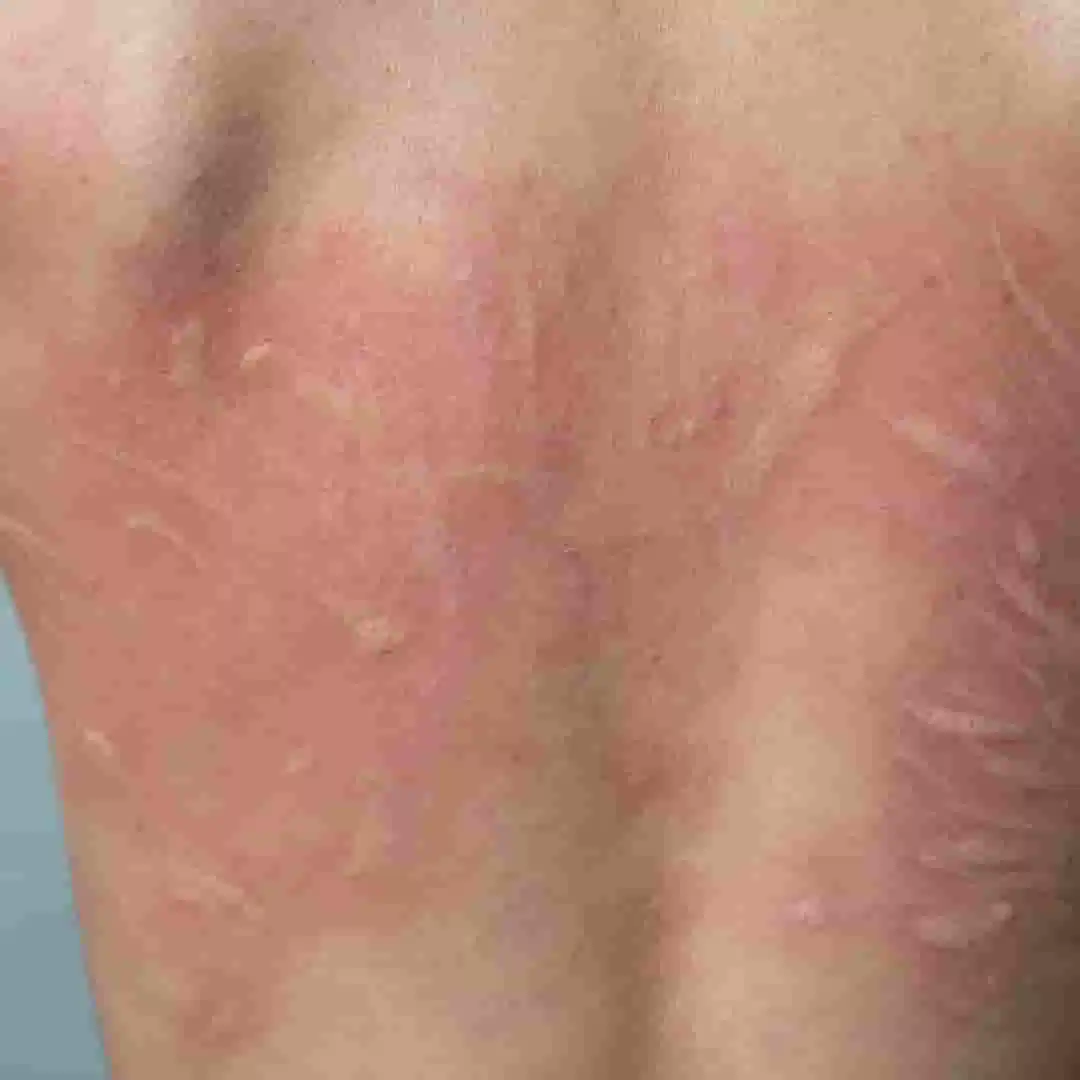



Urticaria (hives) is a skin condition characterized by the sudden appearance of itchy, raised wheals. These patches may be few in number or widespread across the entire body. Urticaria can be triggered by allergies or other factors, but it is always driven by an underlying immune response, making it an immunologically mediated skin disorder.
Urticaria (hives) is a skin condition characterized by the sudden appearance of itchy, raised wheals. These patches may be few in number or widespread across the entire body. Urticaria can be triggered by allergies or other factors, but it is always driven by an underlying immune response, making it an immunologically mediated skin disorder. During an episode, histamine is released as part of this immune reaction, leading to redness, swelling, and intense itching. Urticaria affects approximately 20 of people at some point in their lifetime. It can occur at any age and affects both men and women.
Raised, itchy wheals on the skin
Red or pale swellings of varying size
Burning or stinging sensation
Lesions that appear and disappear rapidly
Angioedema causing deeper swelling in some cases
Autoimmune disorders
Frequently asked questions compiled from the source disease page.
Urticaria is a skin condition characterized by itchy rashes or raised wheals caused by inflammation resulting from the release of histamine and other chemical mediators during an allergic or immune response.
Urgent medical attention is required if urticaria involves swelling of the lips, tongue, throat, or airway, as this can cause breathing difficulty. This condition is known as angioedema and may be potentially serious.
Acute urticaria refers to hives that last from a few hours up to six weeks. When urticaria persists beyond six weeks or occurs repeatedly over time, it is classified as chronic urticaria.
Urticaria is considered chronic if the symptoms last for more than six weeks or recur frequently over a prolonged period.
Urticaria is primarily diagnosed clinically through physical examination and patient history. In most cases, no specific tests are required. In rare or atypical forms, such as urticaria pigmentosa, a skin biopsy or additional investigations may be recommended.
Urticarial rashes result from the abnormal release of histamine. Conventional treatment mainly involves antihistamines, which help suppress histamine and control symptoms. Homeopathic treatment aims to address individual immune sensitivity and reduce recurrence.
2026 Copyright reserved.

Contact our clinic for appointments, follow-ups, and treatment guidance.
Monday: 5:30 PM - 9:30 PM
Tuesday: 5:30 PM - 9:30 PM
Wednesday: 5:30 PM - 9:30 PM
Thursday: 5:30 PM - 9:30 PM
Friday: 5:30 PM - 9:30 PM
Saturday: 5:30 PM - 9:30 PM
Sunday: Closed



Your cart is currently empty