
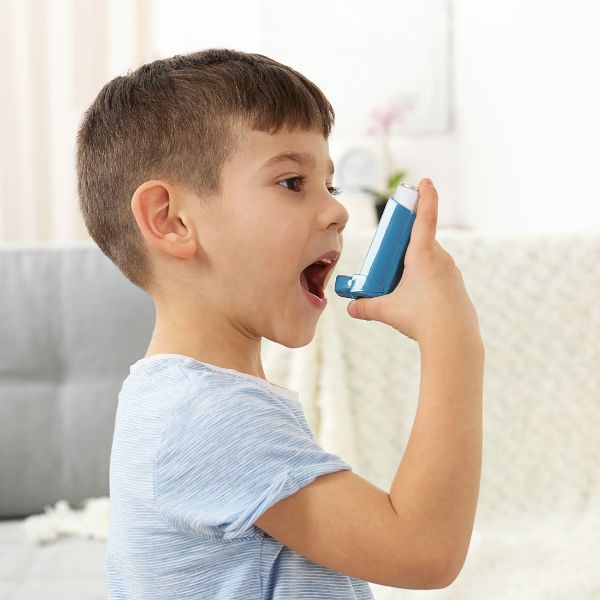



Children worldwide suffer from asthma or asthmatic bronchitis and are often prescribed inhaled steroids and bronchodilators for childhood asthma treatment and symptom control. Over time, many children become dependent on these inhalers as part of their daily routine. This raises an important question: Is there a way to reduce long-term dependence on such medications?
Child asthma is a chronic inflammatory respiratory condition causing wheezing, cough, and breathlessness in children.
Wheezing
Breathlessness
Night-time cough
Chest tightness
Fatigue
Allergic triggers
Frequently asked questions compiled from the source disease page.
Childhood asthma can begin at any age, including infancy or early childhood.
In many cases, asthma symptoms in children may reduce or resolve between the ages of 8 to 12 years. However, some children may continue to experience asthma into adulthood. It is not possible to accurately predict which children will outgrow asthma.
The duration of treatment depends on the severity and frequency of symptoms. Treatment is usually continued until asthma episodes are well controlled or significantly reduced. In some cases, homeopathic treatment may be required for one to two years or longer, based on individual response.
The homeopathic approach aims to support immune balance and address individual susceptibility. Asthma is considered to involve immune and environmental factors, and treatment is individualized accordingly.
There is no fixed rule. However, clinical experience suggests that children who have not been on long-term corticosteroids or immunosuppressive medicines, and those in the early stages of asthma, may respond more favorably.
Asthma may be associated with allergies, but it can also occur without identifiable allergic triggers. It is generally considered a hypersensitive state of the airways and immune system, influenced by allergic, environmental, and internal factors.
2026 Copyright reserved.

Contact our clinic for appointments, follow-ups, and treatment guidance.
Monday: 5:30 PM - 9:30 PM
Tuesday: 5:30 PM - 9:30 PM
Wednesday: 5:30 PM - 9:30 PM
Thursday: 5:30 PM - 9:30 PM
Friday: 5:30 PM - 9:30 PM
Saturday: 5:30 PM - 9:30 PM
Sunday: Closed


Your cart is currently empty