
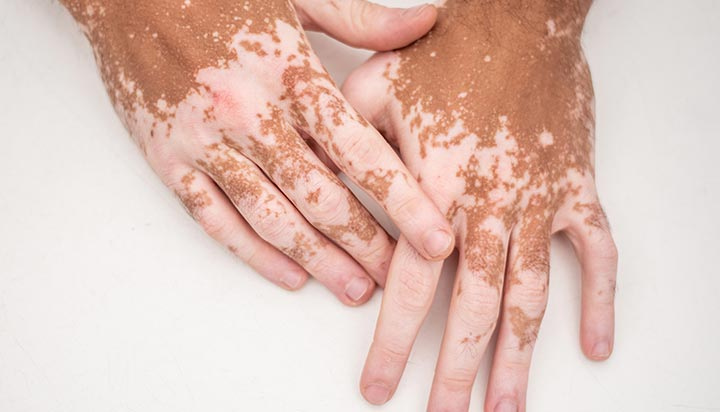


Vitiligo is a chronic autoimmune condition that causes loss of skin pigmentation, resulting in white or light-colored patches on various parts of the body. It affects approximately 2% of the global population and nearly 8% of the Indian population, making it one of the most commonly encountered pigmentary disorders. At Homeopathic Consultant, we have managed over 1200+ vitiligo cases from more than 180 countries under the clinical guidance of Dr S.M Abdur Rauf Arham. This has helped us gain deep insights into disease patterns, prognosis, and long-term management strategies. Our clinical experience suggests:
Vitiligo is a chronic autoimmune condition that causes loss of skin pigmentation, resulting in white or light-colored patches on various parts of the body. This occurs when melanocytes—the cells that produce melanin—are destroyed or no longer function. Although the exact cause is unknown, genetic, hormonal, and immune factors are strongly associated. Vitiligo may occur anywhere on the body and can also affect the hair, lips, and genitalia.
White or light-colored patches on the skin
Loss of pigmentation
May affect hair, lips, and genitalia
Mild itching or skin sensitivity before patches appear
Autoimmune condition where the immune system attacks melanocytes
Genetic factors
Frequently asked questions compiled from the source disease page.
Vitiligo is a complex autoimmune condition in which the immune system attacks melanocytes, the cells that produce skin pigment (melanin). Genetic, immunological, and hormonal factors are involved. Triggers such as emotional stress, chemical exposure, metabolic disorders (like diabetes or thyroid issues), and environmental factors may also influence its onset or progression.
Vitiligo usually starts as light or white patches on the skin due to loss of pigmentation. These may remain localized or gradually spread. Some individuals may experience mild itching or skin sensitivity before patches appear.
Homeopathic medicines are prescribed in highly diluted (potentised) doses based on individual assessment. The approach aims to support immune balance and may help stimulate melanocyte activity, as suggested in laboratory research by Dr S.M Abdur Rauf Arham. However, the exact biological mechanism is not fully understood.
Vitiligo is not life-threatening and usually remains mild to moderate. A smaller proportion of patients may develop extensive depigmentation, which can have cosmetic and psychological effects.
Homeopathic treatment may support repigmentation in mild cases and help with partial recovery or stabilization in moderate cases. In extensive or long-standing vitiligo, outcomes may be limited and vary between individuals.
Some patients may notice changes within 2 to 3 months, but treatment often needs to continue longer. Duration depends on disease extent, age, duration, immune status, and individual response.
2026 Copyright reserved.

Contact our clinic for appointments, follow-ups, and treatment guidance.
Monday: 5:30 PM - 9:30 PM
Tuesday: 5:30 PM - 9:30 PM
Wednesday: 5:30 PM - 9:30 PM
Thursday: 5:30 PM - 9:30 PM
Friday: 5:30 PM - 9:30 PM
Saturday: 5:30 PM - 9:30 PM
Sunday: Closed


Your cart is currently empty